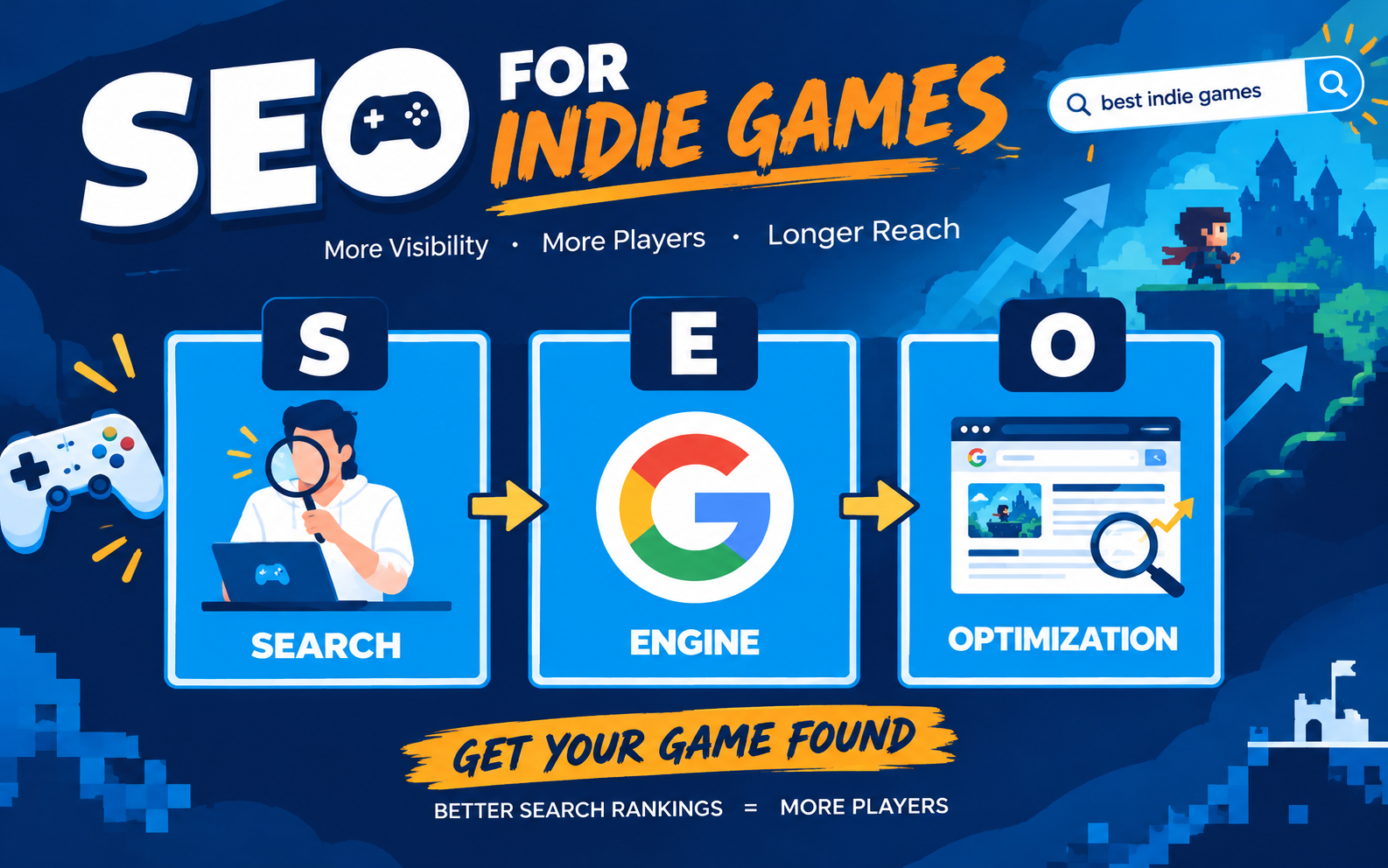
Great Games Still Get Overlooked
You spend two years on your game. You polish the gameplay, build the world, publish your store page, and share the trailer everywhere you can.
For a few days, people notice. Then the posts sink beneath newer ones.
Your game is still live, though, and players are still searching for something new to play. The real question is whether they can find yours.
Indie game discoverability is one of the hardest problems developers face, and talent alone doesn't solve it. That's where search engine optimization (SEO) comes in.
What SEO Means for Indie Developers
SEO is the practice of making content easier for search engines to understand and show to people looking for it.
For game developers, that means publishing clear, useful information that matches what players actually search for, such as:
- Best indie survival horror games
- Pixel art games worth playing
- Underrated indie RPGs
- Games like the ones they already love
Each of those searches is a chance for someone to discover your game. SEO doesn't guarantee a top ranking, but it gives you a channel that doesn't depend on a post going viral.
Why Search Outlasts Social Media
Social media is great for community and updates, but feeds move fast. A post that performs well today is buried tomorrow.
Search works on a longer timeline. An article or feature about your game can stay findable for months or years, reaching players who never saw your launch announcement.
That isn't automatic. Rankings shift and competition changes. But content built to be found has a lifespan that a social post doesn't, which is why launch day shouldn't be your only plan.
Five Ways to Make Your Game Easier to Find
You don't need a big budget to start. These steps help with how to promote an indie game over the long term.
1. Make your store page clear. Whether your game lives on Steam, itch.io, or elsewhere, your page should explain the genre, core gameplay, and what makes it different. Use accurate screenshots, a trailer that hooks in the first few seconds, and tags that genuinely match the game.
2. Write for the way players search. Think about how a stranger would find you: by genre, art style, mechanics, or "games like" another title. Cover those angles naturally, and skip keyword stuffing. The goal is to help the right players understand what you've made.
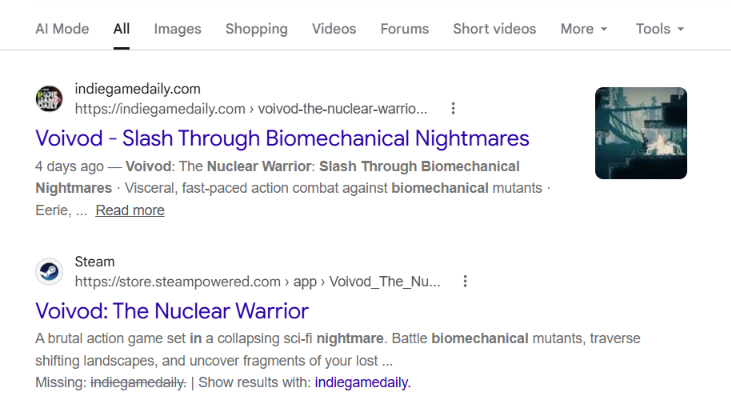
3. Get featured where your audience reads. Indie blogs, newsletters, and genre communities can introduce your game to people who never saw your social posts. A feature also gives you a dedicated, shareable page for press outreach. Choose outlets by audience fit and editorial quality, not just size.
4. Keep a consistent presence. Update your store page, keep your website current, and make official links easy to find. When you're covered, make sure the coverage links back to your official page.
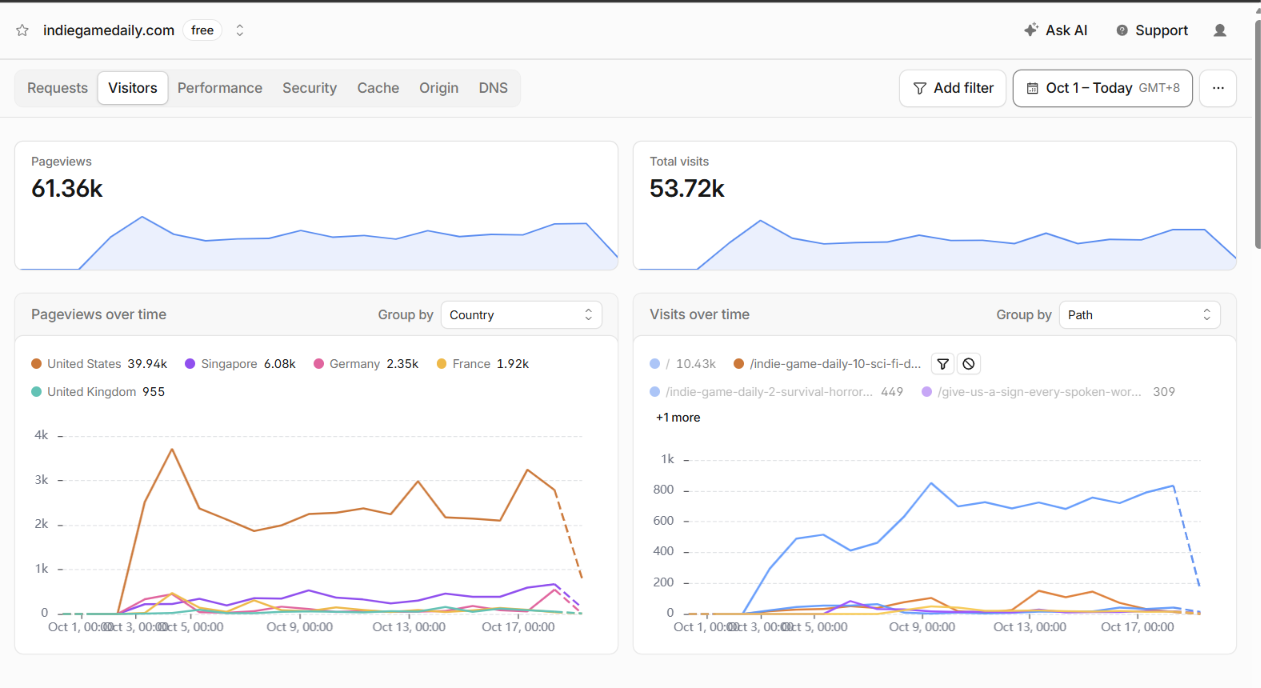
5. Measure what works. Look beyond total views. Track where visitors come from, which pages keep getting traffic, and whether people click through to your store page. Compare search, social, referral, and direct traffic, then spend your time where it pays off.
What SEO Can't Promise
Be wary of anyone who guarantees rankings, wishlists, or sales. Results depend on competition, content quality, and whether people are searching for your type of game at all. And visitors who arrive still have to decide the game is for them.
Treat SEO as a long-term discovery strategy, not a shortcut. It works best alongside a strong trailer, a good store page, an active community, and steady promotion.
Launch Day Is the Start, Not the Finish
Some games find their audience immediately. Many build slowly through recommendations, creators, search results, and word of mouth. A player might hear about your game from a friend this week, find an article about it next month, and wishlist it after that.
The more places your game can be found, the more chances it has to reach the right player.
Helping Players Find Indie Games
At Indie Game Daily, we believe indie games deserve to be discovered long after the launch buzz fades. We publish features and searchable articles that give games another place to be found.
Making a great game is the first step. Helping players find it is the next one.
Explore indie games on Indie Game Daily, and keep an eye out for your next favorite hidden gem.